


Defense Machining Services in PA
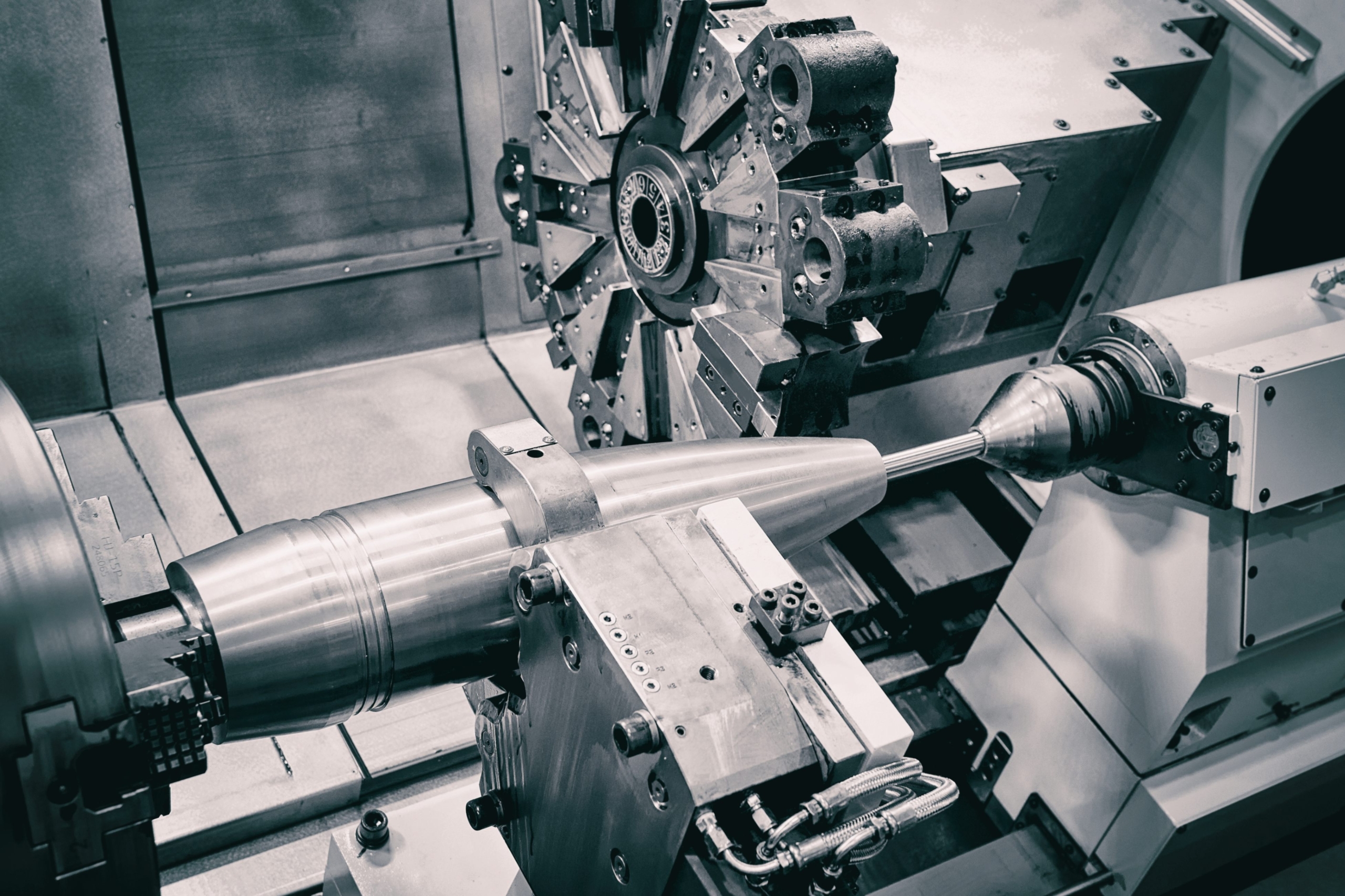
Some defense programs use one shop for machining and separate accredited vendors for heat treating, plating, and other finishing steps. Each added vendor is another company to approve and another set of certifications to track. Managing all of those suppliers on one program is challenging.
At King Precision, you get defense machining services and finishing from one ITAR-registered supplier. Your certifications and inspection records stay in one place on every project.
Read on to learn more about our Swiss machining, engineering support, and production capacity for small defense parts.
Get a Quote for Defense Machining Services
Small Defense Parts That Require ITAR Registration
Any company in the business of manufacturing defense articles in the United States must register with the State Department’s Directorate of Defense Trade Controls (DDTC). A shop needs that registration to make even one of these small parts on the U.S. Munitions List (USML):
- Automatic Firearm Parts: Category I lists bolts, bolt carriers, sears, slides, barrels, and receivers specially designed for fully automatic firearms.
- Firing Mechanism Parts: Firing mechanisms for howitzers, mortars, grenade launchers, and other armament larger than .50 caliber appear in Category II with their specially designed parts.
- Tipped and Cored Projectiles: Projectiles of any caliber that use tungsten, steel, or beryllium copper tips or cores fall under Category III.
- Ammunition Fuzing Parts: Safing, arming, and fuzing components for Category III ammunition are also controlled in Category III along with their specially designed parts.
- Missile Connectors: Umbilical and interstage electrical connectors specially designed for rockets and missiles with at least a 300 km range belong to Category IV.
Defense Machining Services at King Precision
At King Precision, our ITAR-registered facility in Pennsylvania provides defense machining services from initial design consultation through final inspection and delivery. We machine prototypes and medium to large production runs. Only authorized U.S. persons enter the areas where we handle your drawings and other controlled technical data.
Both our machine shop and Swiss shop operate under the same ITAR registration and provide these services:
- Swiss Lathe Machining: Small-diameter parts are turned on our Tornos GT-26 and GT-32 Swiss CNC machines.
- 4- and 5-Axis Milling: Setup times on 4- and 5-axis CNC vertical machining are reduced with modernized tooling and workholding systems.
- CNC Turning: Round components up to 12.000 inches in diameter are turned on lathes with live tooling.
- Grinding and EDM: Surface grinding, cylindrical grinding, Ram EDM, and Wire EDM are performed alongside our CNC milling and turning.
- Hard-to-Machine Alloys: Titanium, Inconel, Hastelloy, and stainless steels are machined to customer prints.
Producing Small Defense Parts in Volume
We run turning, milling, drilling, and tapping in a single Swiss machining cycle without secondary setups. Keeping the work on one machine removes the part transfers that add dimensional variation. Long and slender components are machined accurately because the guide bushing supports the bar stock close to the cutting zone.
Medium to large production runs come off our Swiss lathes with a high yield of acceptable parts. We keep scrap rates low on specialty and expensive materials with stable fixturing and controlled cutting parameters. Our machinists hold tolerances as tight as ±0.0002 inches that repeat from part to part.
Engineering Support From Prototype to Production
Our team reviews each design for manufacturability and suggests changes that improve machinability without altering functional requirements. Those changes reduce material waste and improve first-pass success rates. Engineering support also includes new product design, rapid prototyping, reverse engineering, and fixture design.
An aerospace OEM brought us a component that was difficult and costly to manufacture in its original form. We rebuilt the part in modern software through reverse engineering and recommended a higher-performance material. Several prototype iterations led to a lighter and stronger part with better acceptance rates in full production.
Value-Added Services Through One Supplier
Material testing, heat treating, laser welding, metal plating, and precision polishing are offered with our machining. Our Polish Shop provides laser welding, plating, and precision polishing under our ITAR registration. Polishers there average more than 25 years of trade experience and use NIST-calibrated instruments.
Each finishing step is coordinated through a single supplier relationship. Your buyers work with one ITAR-registered supplier for machining and finishing. You also coordinate fewer outside vendors on your production schedule.
Inspection and Traceability on Every Project
Defense programs often require dimensional records, certification tracking, and a documented measurement history before shipment approval. Those records are built from measurement methods and documentation systems like these:
| Method | What It Checks |
| Keyence laser systems and OGP microscopes | Non-contact measurement on Swiss-machined components |
| Toolmakers’ microscopes and calibrated hand tools | Fine-detail inspection |
| Coordinate measuring machine (CMM) | Part tolerances against the specified range |
| Routing system | Material, heat treat, and plating certifications for every project |
| Documentation management | Project materials from initial receipt to final delivery |
| Inspection reports | Measurement records available to customers on request |
Defense Machining Services FAQS
Q: Is ITAR registration the same as an export license?
A: ITAR registration is not an export license and includes no export rights or privileges. Exports of defense articles generally need a separate license or other approval from DDTC.
Q: Do foreign person employees need approval to access ITAR technical data?
A: A company must obtain a DDTC license or other approval before foreign person employees access ITAR-controlled technical data. The same rule applies to officers and senior managers who are foreign persons.
Q: Are semi-automatic firearm parts controlled under ITAR?
A: Most parts specially designed for semi-automatic firearms up to .50 caliber left ITAR control in March 2020. Their export is now controlled under ECCN 0A501 on the Commerce Control List.
Q: How long do ITAR registrants keep their records?
A: Five years. 22 CFR 122.5 starts that clock at the transaction date or at the expiration of the related license or other approval. Those records cover the manufacture, acquisition, and disposition of defense articles and technical data.
Q: How does King Precision dispose of controlled technical data?
A: King Precision securely disposes of controlled technical information with methods that remove all traces from computers and storage devices. Each destruction is documented as proof that the data was handled according to regulatory requirements.
Defense Machining Services From King Precision
Defense machining services for small parts on the U.S. Munitions List call for an ITAR-registered shop, tight process control, and documented inspection records. Keeping machining and finishing with one supplier also shortens your vendor list.
King Precision machines small parts for defense contractors under our ITAR registration. Our team coordinates engineering support, finishing, and inspection reports on each project.
Click below for a quote and to learn more about our defense machining services.